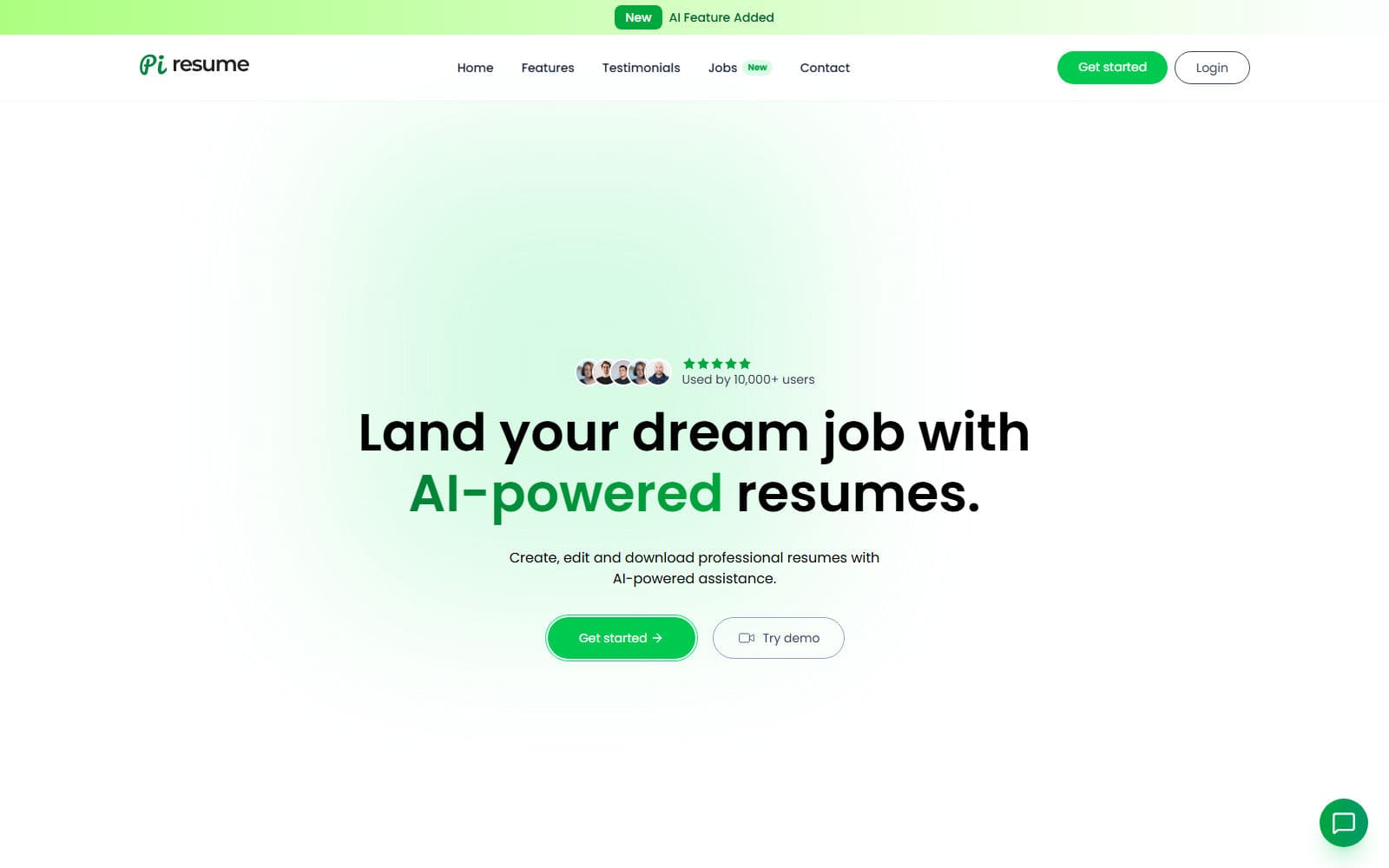
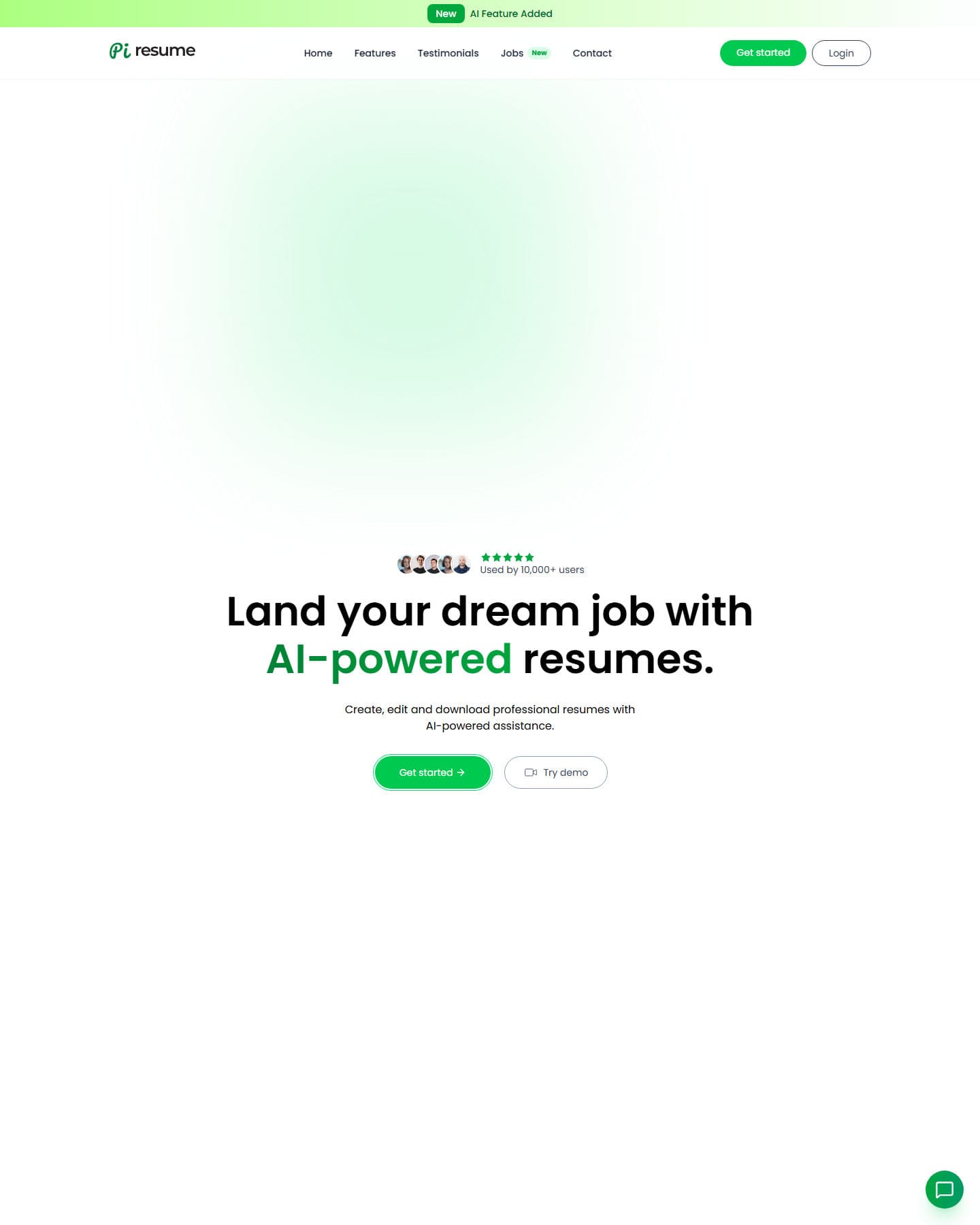
Pi Resume is an AI-assisted resume builder built in-house: people create, edit and download professional resumes with AI help, and browse job listings alongside them. It had to ship as a product people sign into and use, not a page describing one.
- Client
- Pi Resume
- Industry
- Software (SaaS)
- Scope
- Product design, full-stack build and launch
- Year
- 2025
Results
How we got there.
- Product design
- Full-stack build
- AI integration
- Launch
Let people use it before asking who they are
A resume builder asking for an email before showing anything is asking for trust it has not earned yet — and the people who need one most are usually mid-application and impatient. The product leads with a working demo: you can build something real before a signup prompt appears. The account exists for the thing an account is actually for, which is coming back to a resume you already made.
Put the jobs next to the resume
Writing a resume and looking for a role are the same session, split across two tabs on most people’s screens. Listings sit inside the product rather than in a blog post about it, so the thing you tailor the resume for is on the page while you are tailoring it. It also gives the product a reason to be opened on a day when nobody needs to edit anything.
AI that drafts, not a form that generates
The failure mode of AI resume tools is a page of confident filler nobody would submit. The assistance is scoped to drafting and rewriting sections you keep control of — the output is a starting point you edit, not a finished document you are asked to trust. A dashboard keeps every version, because the second draft is always the one that gets sent.
Most of our projects start with a call where we say what we would do differently. That call is free and there is no deck.